
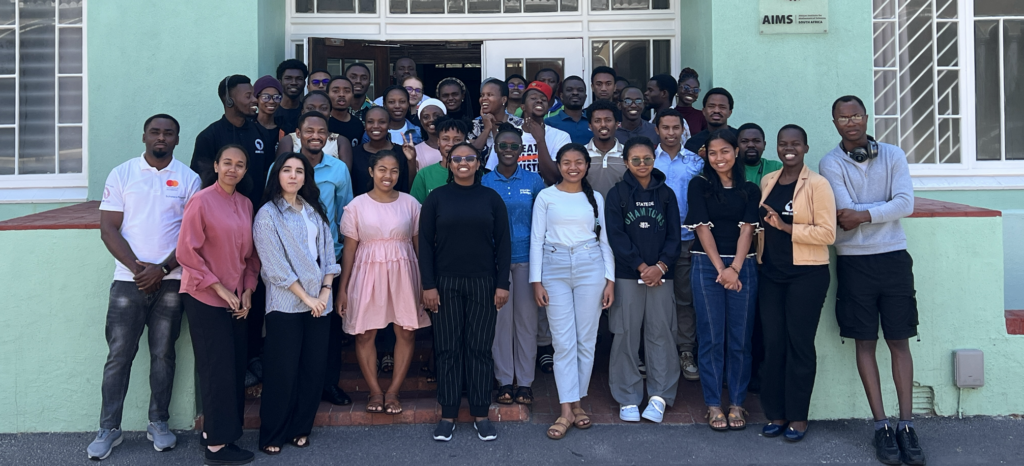
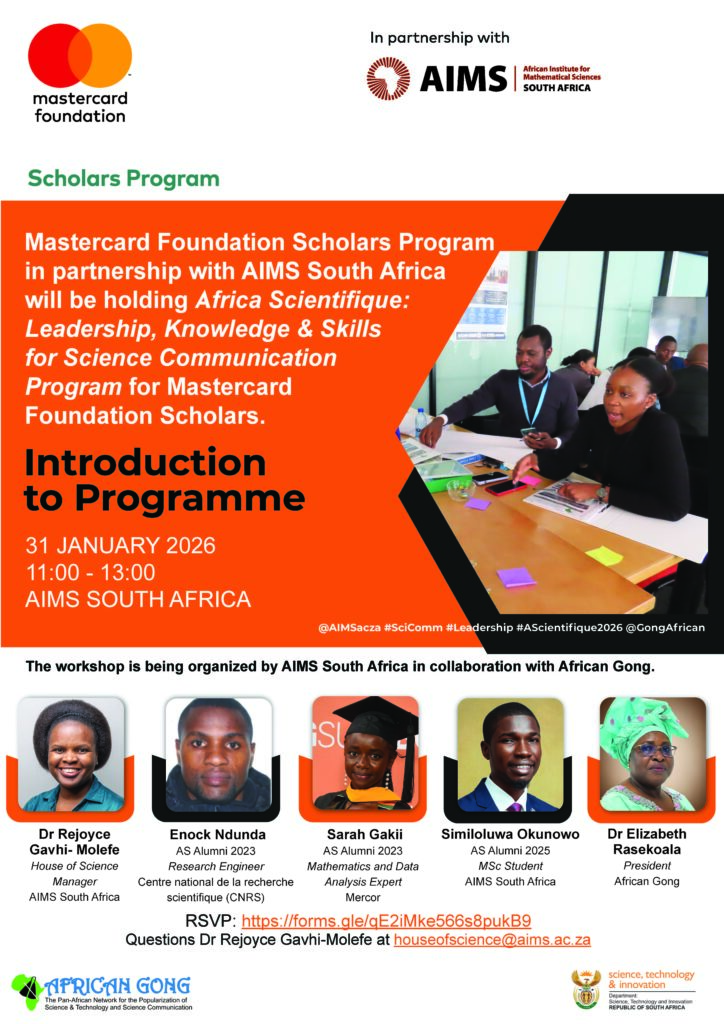
The 2026 three-phased Africa Scientifique programme has kicked off at AIMS South Africa, continuing its mission to equip young and emerging scholars and researchers in the mathematical sciences with critical and transferable skills that are often lacking in formal university STEM training. These skills not only enhance the career advancement of STEM scholars and researchers but also ensure that their research benefits broader communities through diverse platforms and tools, addresses community issues, and contributes to Africa’s development. Central to the programme is an Afrocentric approach that values indigenous knowledge and promotes two-way engagement between scientists and society. Additionally, the programme emphasises the importance of career readiness in an era of rapid technological change, highlighting communication and leadership skills as essential, not optional, for the next generation of scientists.
Delivered since 2020 in partnership with African Gong, the programme has grown into a transformative experience for AIMS South Africa students and researchers. It expanded in 2024 to include Honours Students and Lecturers from Historically Disadvantaged Institutions (HDIs). Building on this momentum, 2025 saw the launch of a dedicated Africa Scientifique (AS) programme for Mastercard Foundation Scholars at AIMS South Africa, alongside the traditional offerings. In 2026, the AS programme at AIMS South Africa is mainstreaming the programmatic framework of delivering for two streams of beneficiaries: AIMS Mastercard Foundation Scholars; and Scholars from the external partner universities in South Africa.
Phase 1 of this year’s programme, the Introductory Workshop, took place on January 31st, dedicated to the Mastercard Foundation Scholars at AIMS South Africa. Mr Prince Anani, a structured Master’s student and Mastercard Foundation Scholar at AIMS South Africa, directed the workshop as part of his leadership training
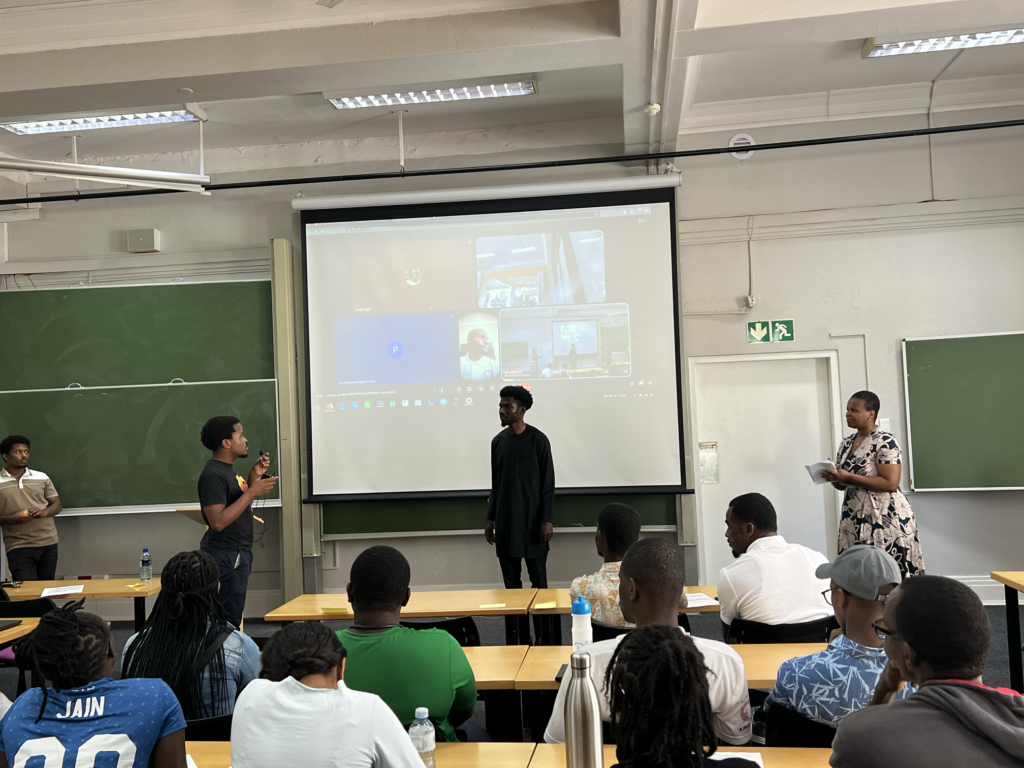
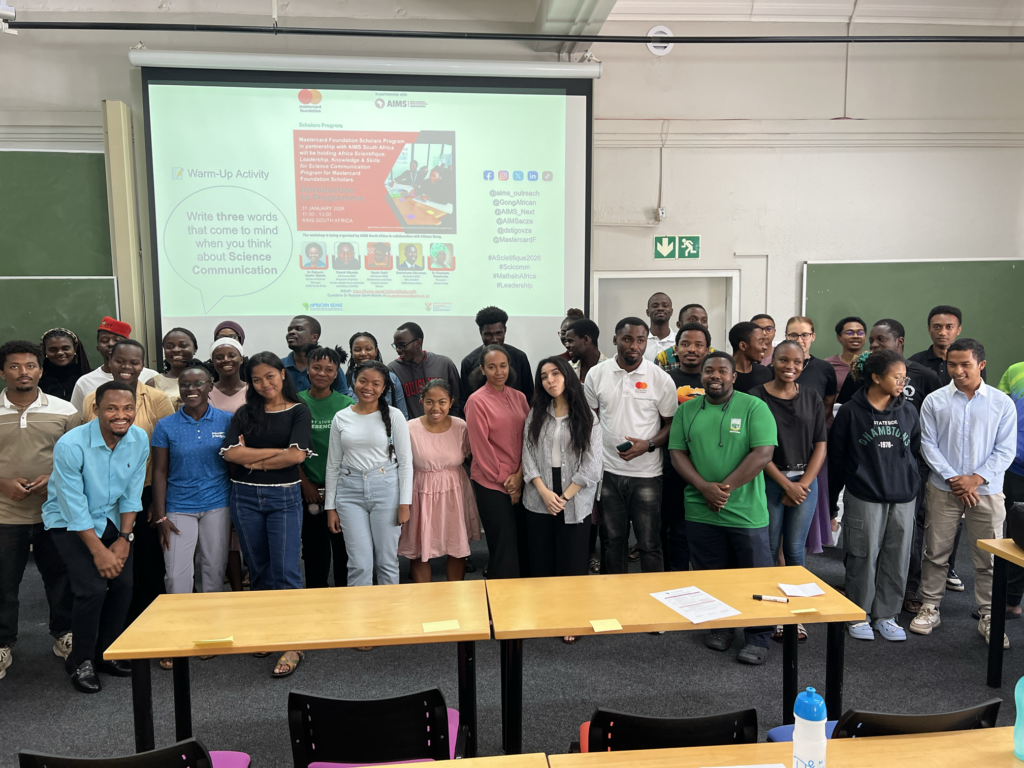
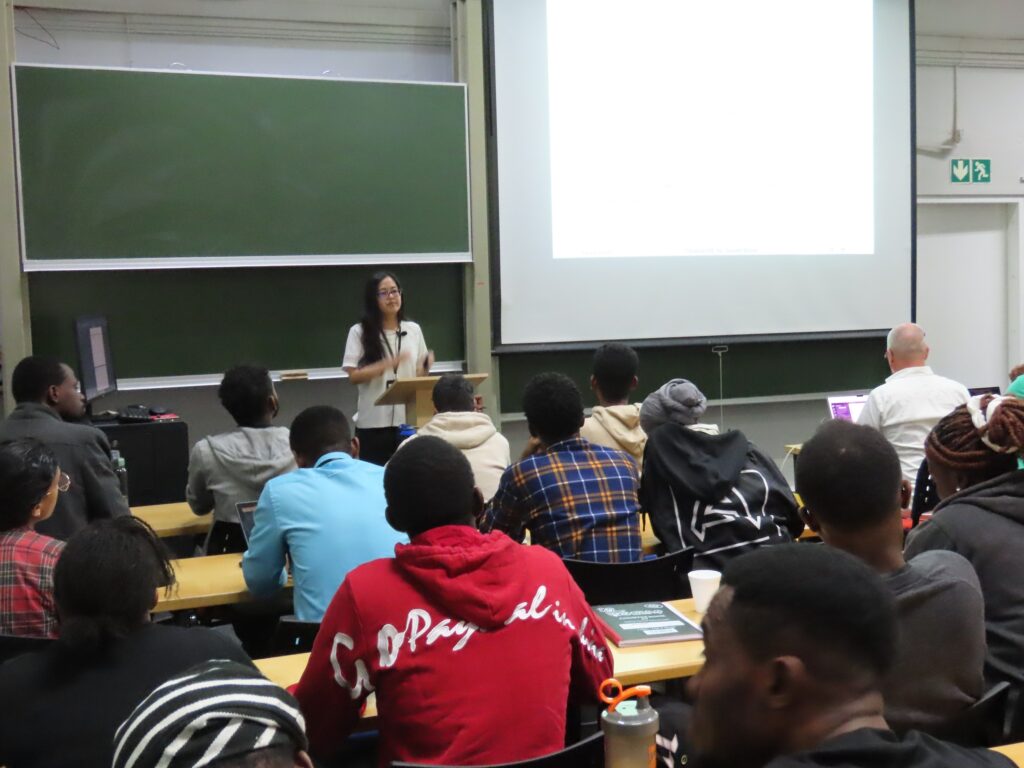
The workshop brought together AIMS students – aspiring science communicators and alumni – for an engaging session filled with insights and inspiration from expert facilitators and AS programme alumni. The Workshop was facilitated by Dr Rejoyce Gavhi-Molefe, AIMS’s House of Science Manager, and Dr Elizabeth Rasekoala, the President of Africa Gong. They introduced participants to the strategic background behind the AS programme development and its transformational pan-African contexts; the AS programme delivery at AIMS in terms of the organisation’s vision, rationale, contexts, challenges and benefits for the students and AIMS; and global historical and contemporary contexts, practices and progressions to describe what science communication is about. The workshop also elaborated on empowering perspectives, career-enhancing benefits for the students, career trajectories in academia, industry, and beyond, and envisaged outcomes for participants.
During the workshop, the AS Programme alumni from the classes of 2023 and 2025 shared their experiences and the impact of Africa Scientifique on their career pathways, serving as mentors and role models. The role models were Mr Enock Ndunda, Research Engineer & AS Alumni 2023 at Centre national de la recherche scientifique (CNRS); Ms Sarah Gakii, a Mathematics and Data Analysis Expert & AS Alumni 2023 at Mercor; and Mr Similoluwa Okunowo, a MSc Student & AS Alumni 2025 at AIMS South Africa.
They reflected on how the programme impacted their confidence, career progression and reshaped their understanding of what it means to be an African scientist.
Enock emphasized the importance of communicating mathematical ideas to non-experts to foster understanding and development in Africa, noting that:
| “Africa will only develop if Africans take responsibility for solving Africa’s problems. The growth I experienced was only possible because I went through this programme. Dr Rejoyce and Dr Elizabeth have given their hearts to nurturing African talent, but what truly matters is what you do after you leave this room—how you use the knowledge, how you respond to it, and how you commit to contributing to the development of our continent.” |
Similarly, Similoluwa also highlighted how the programme transformed his confidence and communication skills.
| “I joined the Africa Scientifique programme out of curiosity, but quickly realised I wasn’t the communicator I thought I was. I had seen AI mainly as research and publications; Africa Scientifique showed me that communication is essential for turning knowledge into real societal impact. The collaborative environment and constant feedback during the workshop completely changed how I think and work.” |
Encouraging the audience to embrace the Africa Scientifique opportunity, Sarah concluded:
| “Use the programme strategically. Don’t just participate – leverage it. Learn how to communicate your thinking daily and intentionally, and you’ll be surprised how many opportunities can open from that.” |
What’s Next?
Two Intensive Three-day Workshops and Six-months Post-Workshop Science Communication Project Activities Mentoring
The second phase of the AS programme – two three-day, intensive, interactive workshops – will take place on 25 – 27 February 2026 and 15-17 April 2026 at AIMS South Africa. It will provide opportunities for the participants to continue their journey and delve deeper into the world of science communication/public engagement and the potential leverages that it can engender for their career advancement. The highlight of the Phase 2 three-day Workshop for Mastercard Foundation Scholars will be a keynote welcome address by Ms Ivy Mwai, Acting Director of the Scholars Program at the Mastercard Foundation. Similarly, the highlight of the Phase 2 three-day Workshop for scholars from external institutions will be a keynote welcome address by Dr Mlunginsi Cele, Director-General of the South African government’s Department of Science, Technology and Innovation (DSTI).
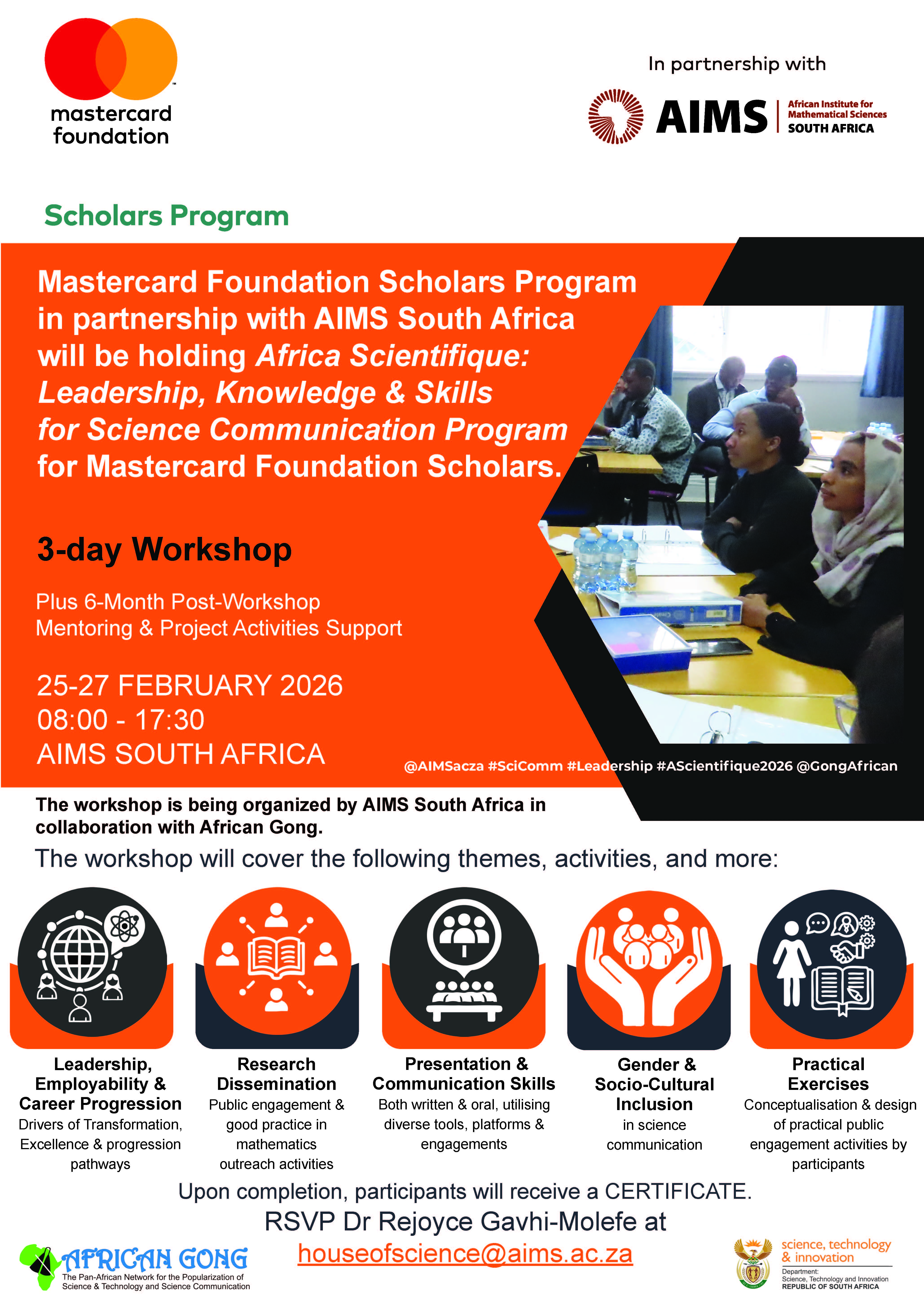
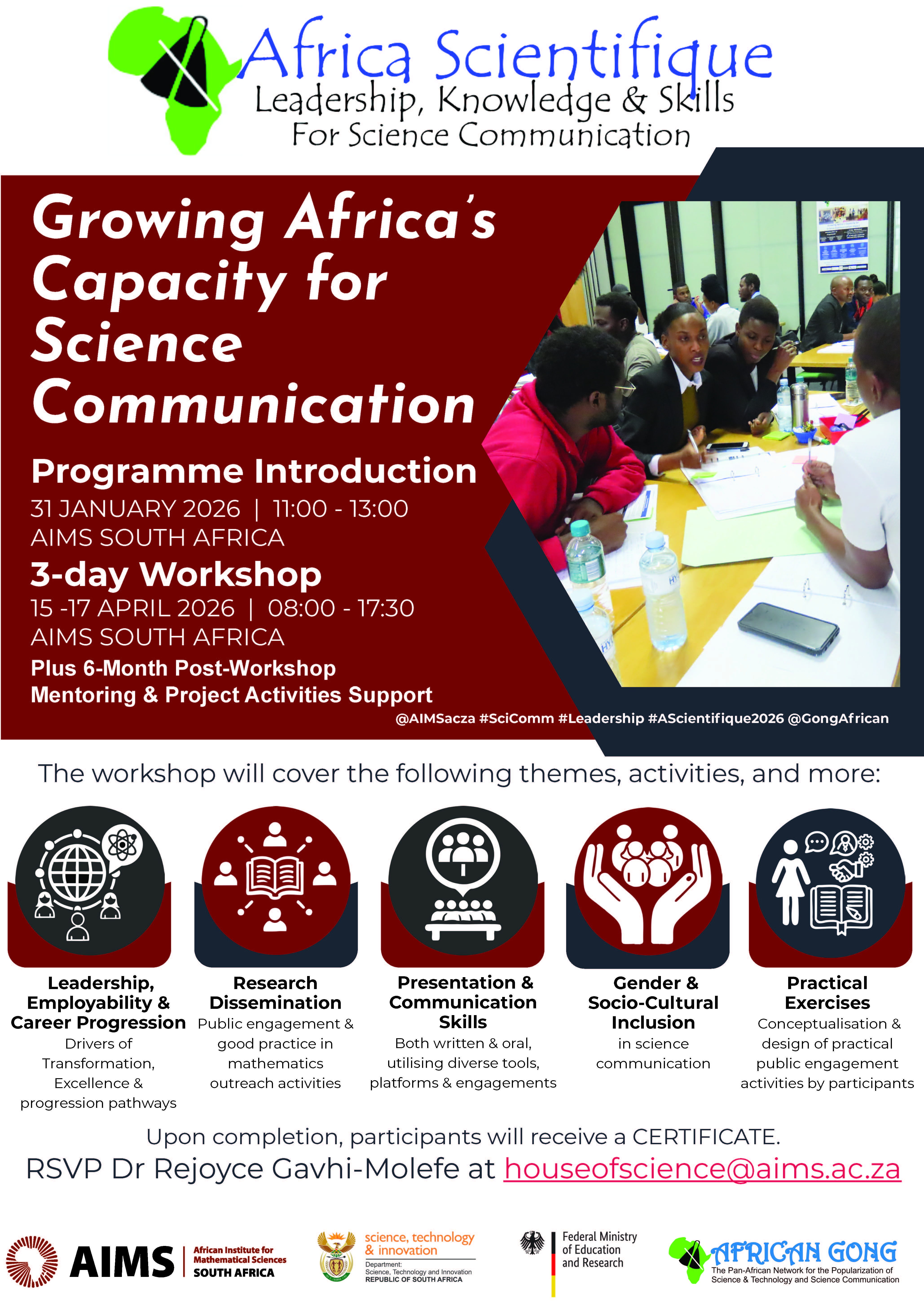
The participants are already excited about the opportunity and ready to embark on the second leg of their science communication journey.
| “The Africa Scientifique Introductory Workshop (31 January 2026) left me with three key take‑aways: (1) science communication must be tailored to African contexts and perspectives to drive relevant progress; (2) the Africa Scientifique Programme provides career‑enhancing benefits that prepare AIMS students for diverse industry and academic opportunities; and (3) the workshop showcased the challenges and positive impact of science communication and public engagement activities for students and alumni, highlighting the programme’s value for both personal development and broader scientific outreach.” 2026 AS Introductory workshop participant. |
 English